Planning · 13 September 2026
Sardinia's Highlights - Top 10 Sights and Attractions in Sardinia - Sardinia4all
Sardinia is the second-largest island in the Mediterranean, and it rewards travellers who look beyond the beach. The coastline is undeniably spectacular, but inland you will find Bronze Age stone towers, ancient burial g
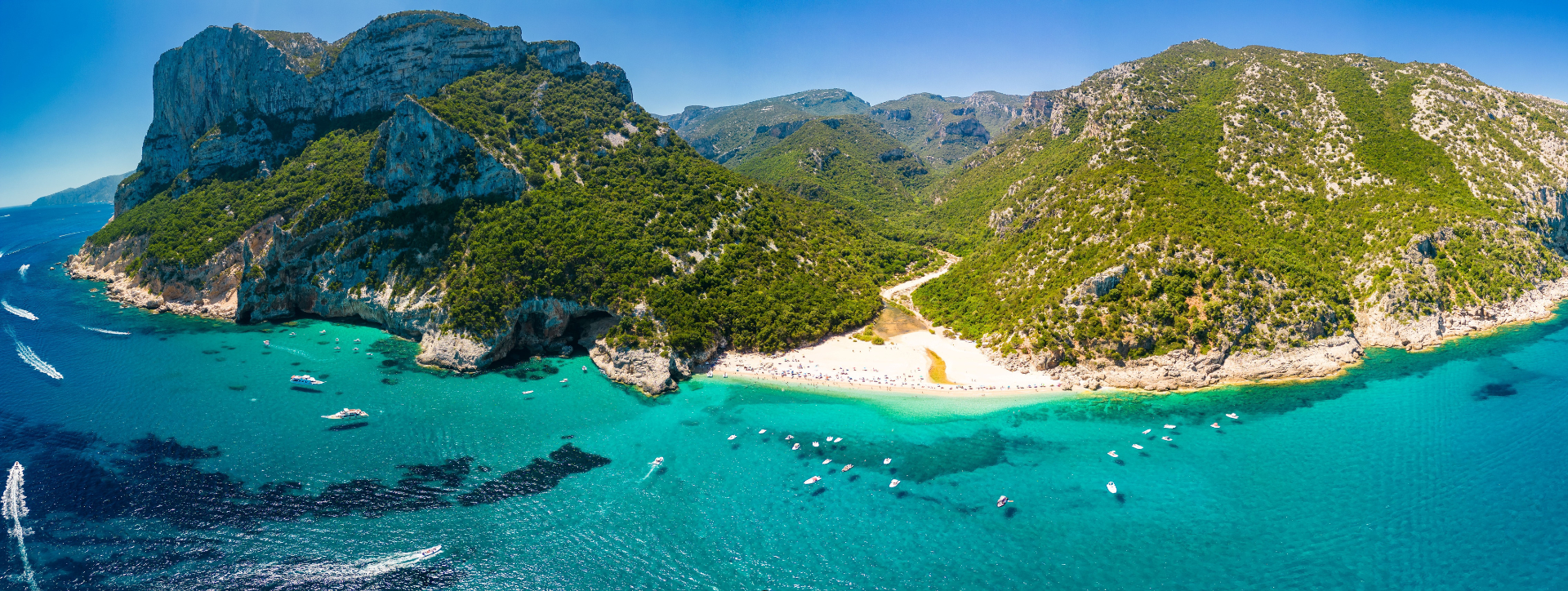
Sardinia is the second-largest island in the Mediterranean, and it rewards travellers who look beyond the beach. The coastline is undeniably spectacular, but inland you will find Bronze Age stone towers, ancient burial grounds, deep gorges and a mountain landscape that feels far removed from the glamorous resorts of the north-east coast.
Here are ten places that give a good sense of what the island offers.
Su Nuraxi di Barumini
The nuraghe at Barumini is the finest surviving example of a type of defensive tower built by the Nuragic civilisation, which flourished on Sardinia from around 1500 BC. The central tower is surrounded by a later ring of four towers, all enclosed within an outer wall. The site was inscribed as a UNESCO World Heritage Site in 1997. Guided visits explain how the complex was built and what it tells us about a society that left no written records.
Su Gorropu Gorge
Su Gorropu, in the Supramonte mountains of eastern Sardinia, is one of the deepest gorges in Europe, with walls rising to around 400 metres in places. It can be reached on foot from the Genna Silana pass on the SS125, or by a combination of off-road vehicle and walking. The route involves boulders and uneven ground, so proper footwear matters. The reward is a narrow limestone canyon that changes character with every turn.
Tiscali
High in the Supramonte above the Lanaittu valley lie the ruins of Tiscali, a Nuragic settlement built inside a collapsed cave. The site is reached only on foot, on a demanding walk of several hours, and is best visited with a local guide. Little is known for certain about the village, which adds to its atmosphere.
The Costa Smeralda
The stretch of coast between Porto Rotondo and Palau takes its name from the colour of its water. Developed from the 1960s onwards, it is now associated with upmarket resorts, marinas and some of the most expensive property in Italy. Even if the prices are not for everyone, the beaches around Capriccioli, Liscia Ruja and Romazzino are open to all.
La Maddalena archipelago
Off the north-east tip of Sardinia lies a group of islands and islets, of which La Maddalena and Caprera are the largest. The archipelago is a national park, and boat trips run from Palau and other ports. Caprera is linked to La Maddalena by a causeway and is best known as the home of Giuseppe Garibaldi, who spent his final years there. His house and tomb are open to visitors.
Cagliari
Sardinia’s capital spreads along the shore of the Golfo degli Angeli and combines a working port with a historic centre. The Castello district sits on a hill above the modern city, with narrow streets, the city walls and the Torre dell’Elefante, a 14th-century tower. The Roman amphitheatre, cut into the rock, dates from the 2nd century AD. The Poetto beach stretches for several kilometres east of the centre.
Alghero
On the north-west coast, Alghero retains strong Catalan influences from the period of Aragonese rule, and a form of Catalan is still spoken by some residents. The old town is enclosed by sea walls, with the cathedral of Santa Maria and the church of San Francesco among its notable buildings. Boat trips run to the nearby Grotta di Nettuno, a large sea cave at Capo Caccia.
Bosa
South of Alghero, Bosa climbs up the banks of the Temo river, with brightly painted houses along the waterfront and the ruined Castello Malaspina above. The river is navigable for a short distance, and the town is known for a type of lacemaking, filet, that has been practised there for centuries.
The Gennargentu mountains
The highest peaks on the island lie in the Gennargentu range, in the centre-east. Punta La Marmora reaches 1,834 metres. The area is sparsely populated and is one of the strongholds of Sardinian traditions, including the singing known as canto a tenore, recognised by UNESCO as intangible cultural heritage. Walking here is best in spring and autumn.
Nora
On the south coast near Pula, the archaeological site of Nora occupies a peninsula with remains from Phoenician, Carthaginian and Roman times. The Roman theatre, baths and mosaics are the most visible features. The site is open to visitors and can be combined with a visit to the nearby beach.