Destinations · 13 September 2026
Sardinia: Far from the crowd
Sardinia is the second-largest island in the Mediterranean, and yet it remains one of the least understood by outsiders. Most visitors arrive expecting the glamorous resorts of the Costa Smeralda and little else. Those w
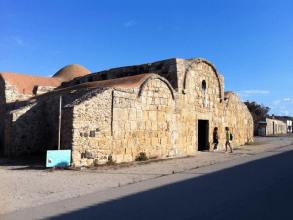
Sardinia: An Island Beyond the Crowds
Sardinia is the second-largest island in the Mediterranean, and yet it remains one of the least understood by outsiders. Most visitors arrive expecting the glamorous resorts of the Costa Smeralda and little else. Those who venture further discover an island of extraordinary range: Bronze Age stone towers, deep limestone gorges, mountain villages where a distinct language is still spoken, and stretches of coastline that see almost no traffic even in high summer.
An Island of Many Identities
Sardinia’s geography explains much of its character. The island sits roughly 200 kilometres west of the Italian mainland, closer to Tunisia than to Rome in terms of travel time from some ports. Its interior is mountainous and sparsely populated, while the coast is fringed with sandy coves, granite headlands and long, windswept beaches. This contrast between mountain and sea has shaped a culture that feels markedly different from mainland Italy.
Sardinian is recognised as a distinct language, and in many inland towns it remains the everyday tongue. Local festivals, known as sagre, celebrate everything from wild boar to honey to the island’s famous pecorino cheese. The island also holds a remarkable concentration of nuraghi — conical stone towers built during the Bronze Age, of which several thousand survive. Su Nuraxi di Barumini, in the south, is a UNESCO World Heritage Site and among the most impressive.
The North: Granite, Wind and Glamour
The northern coast is where Sardinia’s reputation for luxury was made. Porto Cervo, the centrepiece of the Costa Smeralda, draws yachts and celebrities each summer, and the surrounding beaches — Liscia Ruja, Capriccioli, Grande Pevero — are genuinely beautiful, with pale sand and water of an almost unnatural turquoise.
But the north is not only about the Costa Smeralda. The Maddalena archipelago, a short ferry ride from Palau, comprises seven main islands and dozens of smaller ones, protected as a national park. La Maddalena town is lively and unpretentious, and the beaches on Caprera — including Cala Coticcio, known as Tahiti — reward those willing to walk. Further west, the windswept Asinara peninsula and the working town of Stintino offer a quieter, rougher coastline.
Inland from the coast, the Gallura region rises into granite hills dotted with cork oaks. The town of Aggius, surrounded by some of the largest cork forests in Europe, has a small museum devoted to the traditional life of the area. Nearby, the Valle della Luna attracts climbers and walkers with its strange rock formations.
The East: Gorges and Ancient Forests
The eastern side of the island is dominated by the Gennargentu massif, Sardinia’s highest mountain range. This is the island’s wildest and least developed region. The Supramonte plateau, inland from the resort town of Cala Gonone, is a landscape of limestone cliffs, caves and deep valleys. The gorge of Su Gorropu, sometimes called the Grand Canyon of Europe, is reachable on foot or by a combination of jeep and hiking, and its walls rise more than 400 metres in places.
The village of Tiscali, abandoned centuries ago and hidden inside a collapsed cave on a mountain top, is another reward for walkers. The site is accessible only on foot, and the route passes through some of the island’s most striking scenery.
Cala Gonone itself is a good base for boat trips to the beaches of the Gulf of Orosei — Cala Luna, Cala Mariolu and Cala Goloritzè among them — which are largely unreachable by road and remain wonderfully unspoilt.
The South: Cities, Mines and Long Beaches
Cagliari, the island’s capital, is often overlooked by visitors heading straight for the coast. It is a city of real character, built on hills around a medieval quarter, with a long Poetto beach just minutes from the centre. The Roman amphitheatre, the archaeology museum and the lively evening passeggiata along Via Roma are all worth an afternoon.
South of Cagliari, the Costa del Sud offers a string of beaches — Chia, Tuerredda, Porto Pino — that rival anything in the north, with the added advantage of being far less crowded. Inland, the old mining region of Sulcis-Iglesiente is dotted with abandoned workings now being redeveloped as heritage sites and museums.
The island’s southwest corner is also wine country. The vineyards around Santadi and Giba produce Carignano del Sulcis, a robust red that has gained recognition well beyond Sardinia. Several estates welcome visitors for tastings.
The West: Wetlands, Towers and Quiet Coasts
The western coast, facing the open sea, is the least visited part of Sardinia. The Sinis peninsula, near the town of Cabras, combines sandy beaches with the Phoenician and Roman ruins of Tharros, set on a headland above the water. The nearby lagoons are an important stopover for flamingos and other migratory birds.
Further north, Bosa is one of the island’s prettiest towns, its pastel-coloured houses climbing a hillside below a medieval castle. The Temo river, navigable for a short distance, runs through the centre — unusual for Sardinia, where most towns sit well inland.
The coast between Bosa and Alghero, known as the Riviera del Corallo, is rugged and largely undeveloped. Alghero itself retains a strong Catalan identity, a legacy of several centuries of Aragonese rule, and Catalan is still spoken by some residents.
When to Go and How to Get Around
Sardinia’s climate is Mediterranean, with hot, dry summers and mild winters. July and August are the busiest and most expensive months, particularly in the north. May, June, September and October offer warm weather with far fewer visitors, and the island’s interior is at its best in spring, when the wildflowers are out.
Ferries connect Sardinia to the Italian mainland and to France, with ports at Cagliari, Olbia, Porto Torres and Arbatax. Flights arrive at Cagliari, Olbia and Alghero. A car is more or less essential for exploring beyond the main resorts, and the island’s roads — while sometimes slow and winding — are generally quiet.
A Note on Food
Sardinian cooking is robust and distinctive. Porceddu, suckling pig roasted over an open fire, is the island’s signature dish, usually reserved for celebrations. Pane carasau, a thin, crisp flatbread, keeps for months and appears at almost every meal. Seafood is excellent along the coast, particularly bottarga — cured mullet roe — and the island’s lobsters. Cheeses, honeys and olive oils are all produced locally, and the almond pastries of the south are worth seeking out.
Sardinia rewards curiosity. The island’s best moments often lie away from the brochure beaches: in a hill village during a festival, on a walking trail above the sea, or at a long table in an agriturismo where the food has been grown a few hundred metres away.