Destinations · 13 September 2026
Sant Efisio Cagliari
Every year on 1 May, the city of Cagliari turns out for one of Sardinia's most heartfelt religious festivals: the Feast of Sant Efisio. What began as a plea for deliverance from plague in the seventeenth century has grow
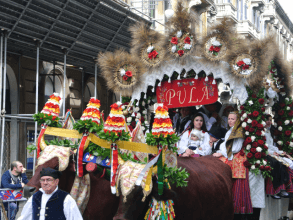
Every year on 1 May, the city of Cagliari turns out for one of Sardinia’s most heartfelt religious festivals: the Feast of Sant Efisio. What began as a plea for deliverance from plague in the seventeenth century has grown into a four-day celebration that draws thousands of visitors to the island’s capital.
A vow made in the time of plague
The story begins in 1652, when a devastating outbreak of plague swept through Cagliari. The city’s authorities turned to Sant Efisio, a Roman soldier martyred on the island in 303 AD, and made a solemn vow: if the saint interceded to end the epidemic, they would honour him with an annual procession in perpetuity. The plague abated, and the city has kept its promise ever since.
The procession
The centrepiece of the feast is the great procession that sets out from Cagliari on the morning of 1 May and travels roughly 40 kilometres to the village of Pula, near the Roman ruins of Nora, where Efisio is said to have met his death. Led by a costumed historical parade, the procession includes representatives from Cagliari’s historic guilds and confraternities, each in traditional dress, alongside the city’s mayor and religious authorities. The participants travel in a slow, ceremonial fashion, and the day’s events are followed by further celebrations in Pula and a return procession to Cagliari on 4 May.
What to expect as a visitor
The feast is a profoundly local occasion, and visitors are welcome to watch from the roadside or join the crowds in Cagliari’s streets. Expect long days, large crowds and a genuinely devotional atmosphere rather than a tourist spectacle. The dates are fixed: the main procession falls on 1 May each year, with the return to Cagliari on 4 May. If you plan to travel to Sardinia in spring, this is one of the island’s most distinctive cultural events.