Planning · 13 September 2026
Cagliari - Sardinia: Discover Cagliari in South Sardinia
Cagliari, the island's capital, occupies a dramatic position on the southern coast, its historic centre rising steeply from the Golfo degli Angeli — the Gulf of Angels. For travellers exploring the south of Sardinia, the
Cagliari: Gateway to Southern Sardinia
Cagliari, the island’s capital, occupies a dramatic position on the southern coast, its historic centre rising steeply from the Golfo degli Angeli — the Gulf of Angels. For travellers exploring the south of Sardinia, the city makes an excellent base, offering a blend of archaeology, lively street life and easy access to long stretches of coastline.
A City of Layers
Cagliari’s history reads like a succession of Mediterranean powers. Phoenician and Carthaginian traders settled here, Rome followed, and later came Pisan and Aragonese rule. Each left its mark on the city’s fabric. The result is a compact historic core — known as Castello — where narrow lanes open onto unexpectedly grand piazzas and where the sea is never far from view.
The medieval quarter sits on a limestone hill, encircled by sturdy walls. Two towers from the old defensive system still stand: the Torre di San Pancrazio and the Torre dell’Elefante, both built in the early fourteenth century during Pisan rule. Climbing the Torre dell’Elefante rewards visitors with a sweeping panorama over the rooftops, the port and the gulf beyond.
Landmarks Worth Seeking Out
The Cattedrale di Santa Maria, on the edge of the Castello district, combines Romanesque, Gothic and Baroque elements — a reflection of the city’s layered past. Nearby, the Bastione di Saint Remy provides a monumental terrace linking the upper and lower town, and its arched walkway is a popular spot for an evening passeggiata.
The Roman Amphitheatre, carved into the rocky hillside, is one of the most significant Roman remains on the island. Although partly quarried away in later centuries, its surviving tiers and tunnels still convey the scale of the original structure.
For those interested in archaeology, the Museo Archeologico Nazionale houses an extensive collection of finds from across Sardinia, including material from the island’s distinctive Nuragic civilisation.
Markets, Streets and Local Flavour
The daily market in the San Benedetto quarter is where Cagliari feels most alive. Stalls overflow with fish landed that morning, seasonal vegetables, cheeses and cured meats. It is a place to wander slowly, perhaps picking up provisions for a picnic.
The Marina district, close to the port, is the city’s social heart in the evenings. Its arcaded streets are lined with bars and restaurants, and the atmosphere is relaxed and unpretentious.
The Poetto and the Coast
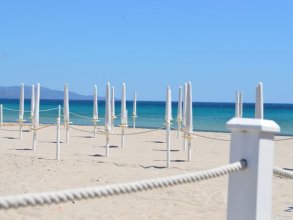
Cagliari’s own beach, the Poetto, stretches for several kilometres along the eastern edge of the city. It is easily reached by public transport and is popular with residents for morning swims and sunset walks. Behind it lie the lagoons of Molentargius and Santa Gilla, important wetland habitats where flamingos can often be spotted.
Beyond the city, the southern coast offers numerous beaches and coves, while the interior rewards exploration with traditional villages, archaeological sites and hill country.
Practical Notes
Cagliari is served by an international airport at Elmas, roughly ten minutes by train or bus from the city centre. The city itself is walkable in its central districts, though the steep climb to Castello is worth noting. Ferries connect the port with mainland Italy and other Mediterranean destinations.
The city works well as a starting point for a wider tour of southern Sardinia, whether by car, by public transport or on foot. Its combination of history, coastline and everyday vitality makes it more than simply a place to pass through.